0
0
 Trending Articles






Few complications are as practical as the ability to track multiple time zones. Once you understand how they work, GMT watches and world timers stop feeling niche and start making complete sense, especially if your work, travel, or daily conversations stretch across different parts of the world. The confusion starts because many watches appear to do the same thing at first glance.


A fourth hand, a city ring, a 24-hour bezel, multiple sub-dials — they all suggest a connection to travel or international timekeeping. In reality, GMT watches, world timers, and multi-time-zone watches operate very differently from one another. By the end of it, the distinction becomes simple: a GMT watch is designed to track one additional time zone clearly and efficiently, while a world timer gives you a global snapshot of time across the planet.
A GMT watch is built around one core feature: an additional hand that completes one full rotation every 24 hours instead of the usual 12. This extra hand points to a 24-hour scale, either printed on the dial itself or displayed through a rotating bezel. That setup allows the wearer to track a second time zone alongside local time. The rotating 24-hour bezel is one of the defining elements of the classic GMT layout.


On watches like the Tudor Black Bay GMT, rotating the bezel allows the wearer to temporarily reference a third time zone without resetting the watch itself. This is where GMT watches separate themselves from broader multi-time-zone complications. A true GMT relies on a dedicated 24-hour hand working in conjunction with a 24-hour scale. Once that architecture changes into multiple sub-dials, rotating city discs, or layered timezone displays, the watch moves into a different category entirely.
Not all GMT watches work the same way. The main difference comes down to how the movement adjusts when changing time zones, which becomes especially important during travel.
A caller GMT is designed for someone who stays in one place while monitoring another time zone remotely. In this setup, the standard local hour hand remains fixed as the primary display, while the GMT hand can be adjusted independently in one-hour increments. If you work with teams overseas, call family abroad, or regularly track another region during the day, this system works perfectly well. However, the limitation becomes clear once you start travelling.


Once you land in a new country, adjusting local time usually requires stopping the movement and resetting the main hands altogether before repositioning the GMT hand back to home time. It is functional, though less seamless for frequent travellers crossing multiple time zones regularly. Many office GMT watches are built on modified ETA or Sellita architectures, which is one reason this configuration appears frequently at more accessible price points.
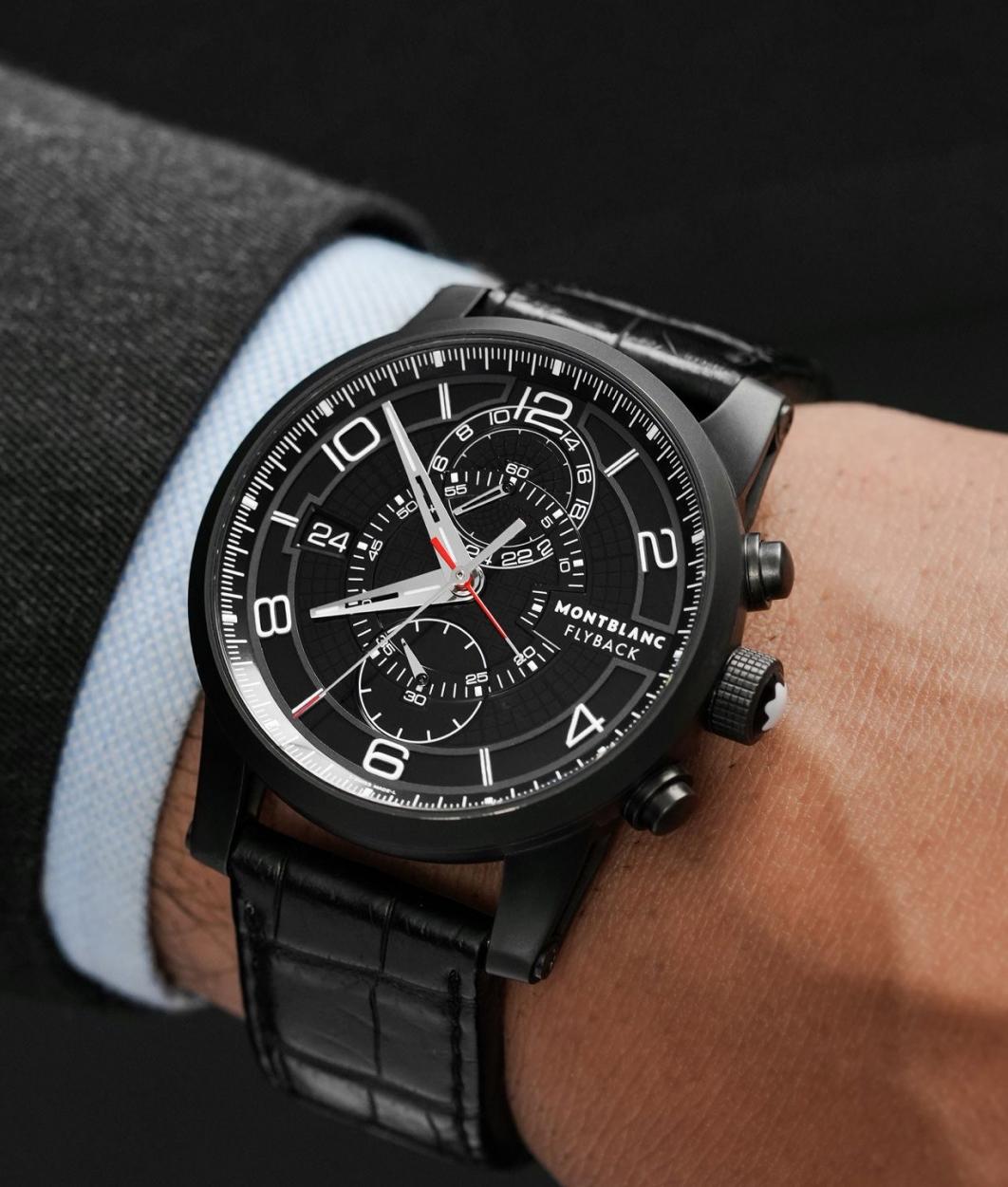
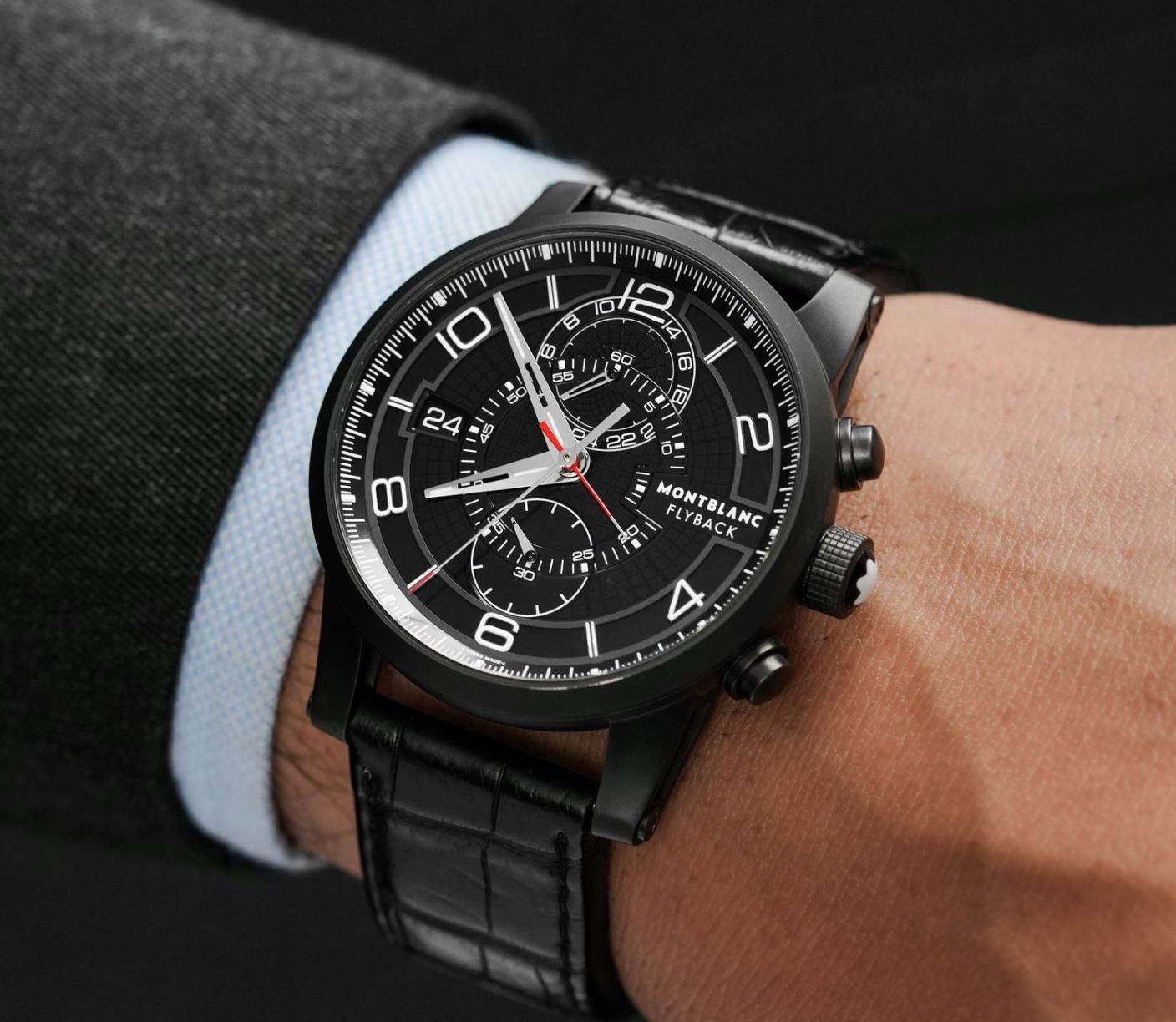
Montblanc TimeWalker GMT watch at Second Movement.
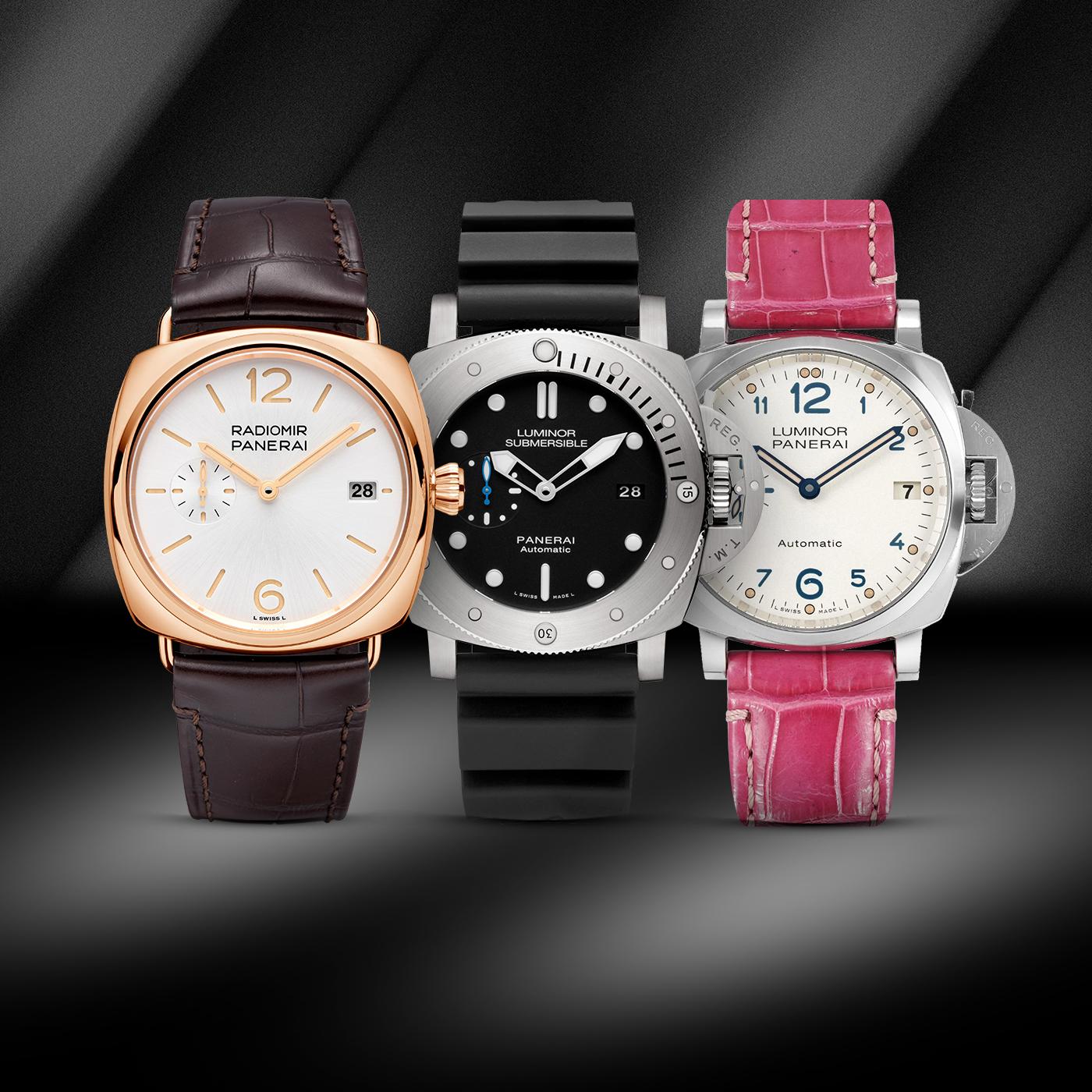
The Panerai PAM01404 is a strong example of the office GMT layout. The same applies to the Montblanc TimeWalker 106507 and the Graham Chronofighter 2OVGS.B39A, all of which display an additional time zone without offering independently jumping local-hour adjustment.


The traveller GMT, sometimes called a flyer GMT or true GMT, is built specifically for people physically moving between time zones. Here, the local hour hand adjusts independently in one-hour jumps while the GMT hand remains locked to home time. The movement itself continues running throughout the adjustment, which means accuracy is maintained while travelling. This single feature makes a huge difference during travel. You step off a flight, advance the local hour hand forward or backwards, and continue wearing the watch normally without interrupting the movement or losing track of home time. On many true GMT watches, the date is also linked to the local hour hand, so it updates automatically when crossing midnight in either direction. This is the configuration most enthusiasts associate with premium travel watches because it reflects how people actually move through the world.


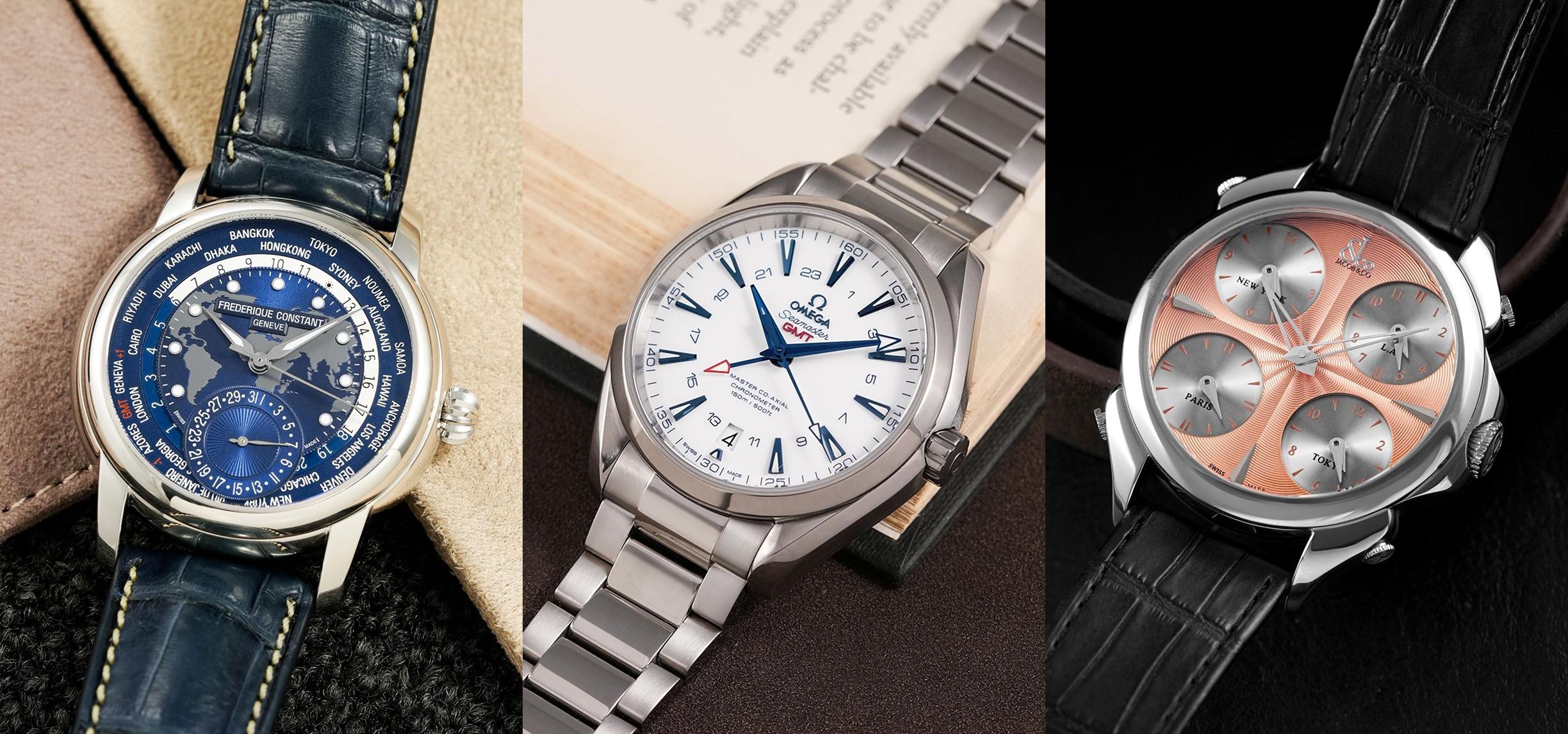
The Omega Seamaster Aqua Terra GMT uses the calibre 8605 with independently adjustable local-hour functionality, placing it firmly in the traveller GMT category. The Tudor Black Bay GMT operates similarly through the MT5652 manufacture calibre.


Grand Seiko Sport GMT timepiece at Second Movement.
Other strong examples include the Grand Seiko SBGE307G with its Spring Drive calibre 9R66, along with the Breitling Bentley A47362X8/B919, which uses Breitling’s more advanced GMT architecture with local jumping-hour functionality.


A world timer approaches international timekeeping from an entirely different perspective. Instead of focusing on one additional location, a world timer is designed to display multiple global time zones simultaneously. Traditional world timers achieve this through two key components: a city ring featuring major world cities and a rotating 24-hour disc positioned closer to the centre of the dial.


Once synchronised, the system allows the wearer to read the approximate time in major cities around the world instantly. You simply locate the city and reference the corresponding hour on the rotating 24-hour scale beside it. This makes a world timer feel less like a travel instrument and more like a global dashboard. The Frederique Constant Manufacture is a classic example of the traditional world timer layout, using a rotating city disc and 24-hour ring to display worldwide time zones simultaneously.
The Omega Seamaster approaches the same concept with a more contemporary execution, while the Breitling Transocean combines world-time functionality with a chronograph architecture.


Some world timers also reinterpret the complication visually. The Arnold & Son Globetrotter places a three-dimensional globe at the centre of the dial, turning the world timer into something far more theatrical while retaining the same underlying principle.


Arnold & Son Globetrotter places a three-dimensional globe at the centre of the dial, turning the world timer into something far more theatrical while retaining the same underlying principle.
Beyond GMTs and world timers, some watches track multiple time zones through entirely different systems. A watch displaying several time zones does not automatically fall into the GMT or world timer category. For example, the Carl F. Bucherer Patravi TravelTec tracks three separate time zones through a combination of a GMT hand and rotating bezel system. It is a multi-time-zone watch, though not a traditional world timer.


The Jacob & Co. Five Time Zone takes an even more unconventional route. Instead of using a central GMT hand or rotating world-time disc, it uses multiple independent sub-dials displaying entirely separate locations simultaneously. Mechanically and visually, it operates very differently from a conventional GMT architecture.


Instead of using a central GMT hand or rotating world-time disc, Jacob & Co. Five Time Zone uses multiple independent sub-dials displaying entirely separate locations simultaneously.
Some watches sit somewhere between categories. The Rado Over-Pole, for instance, uses a city bezel without a rotating 24-hour world-time disc. The wearer aligns cities manually against the main hands to reference global times. It delivers a world-time style function through a much simpler execution.


The easiest way to choose between them is to think about how you interact with other time zones. If you mainly track another city while staying in one place, an office GMT makes complete sense. If you travel internationally and regularly change local time during flights, a traveller GMT is significantly more convenient because of the independently adjustable local-hour hand. For those constantly working across multiple regions and global schedules, a world timer offers a much broader view of international time at a glance. Once you understand those distinctions, the category becomes far easier to navigate. What initially looks like a collection of similar travel watches quickly reveals itself as several very different approaches to tracking time across the world.

Sign up to be emailed when I publish new content. Read. Watch. Shop. Learn. Trade. All in one place.

 14 Jul, 2026
 5 Min Read
 19 Jun, 20264 Min Read
 15 Jun, 20266 Min Read
 30 May, 20265 Min Read
 30 May, 20264 Min Read
 29 May, 20265 Min Read